Top Luxury Safari Expeditions in America: Operational & Planning Guide
The concept of a safari—historically associated with African savannahs, open-air vehicles, and luxury mobile encampments—has undergone a profound conceptual and structural transformation within North America. In the United States and Canada, private wildlife tracking and deep-field naturalism have evolved into a distinct operational category. Rather than replicating African models verbatim, high-end wildlife expeditions across North America integrate specialized tracking logistics, private conservation concessions, and complex multi-agency land management frameworks to offer deep access to native fauna.
Navigating North American megafauna habitats demands an understanding of ecosystems that vary wildly in geography, climate, and legal protections. From tracking coastal brown bears along glacial fjords in Alaska and observing wolf pack dynamics across the Greater Yellowstone Ecosystem to tracking bison herds across sprawling private conservation ranches in Montana, the modern North American wildlife expedition functions at the intersection of wildlife biology, private aviation, and high-end field hospitality. The logistics supporting these journeys operate under strict environmental mandates, where wildlife viewing must occur without altering animal behavior or violating federal protection acts.
This comprehensive guide presents an exhaustive, analytical exploration of private wildlife operations across North America. It examines the operational systems, economic dynamics, risk management protocols, and land-use governance models that define high-end wildlife field operations. Designed for industry practitioners, naturalists, and discerning expedition planners, this guide serves as a definitive reference for understanding how private wildlife tracking functions across the continent’s most isolated landscapes.
Understanding “Top Luxury Safari Expeditions in America.”
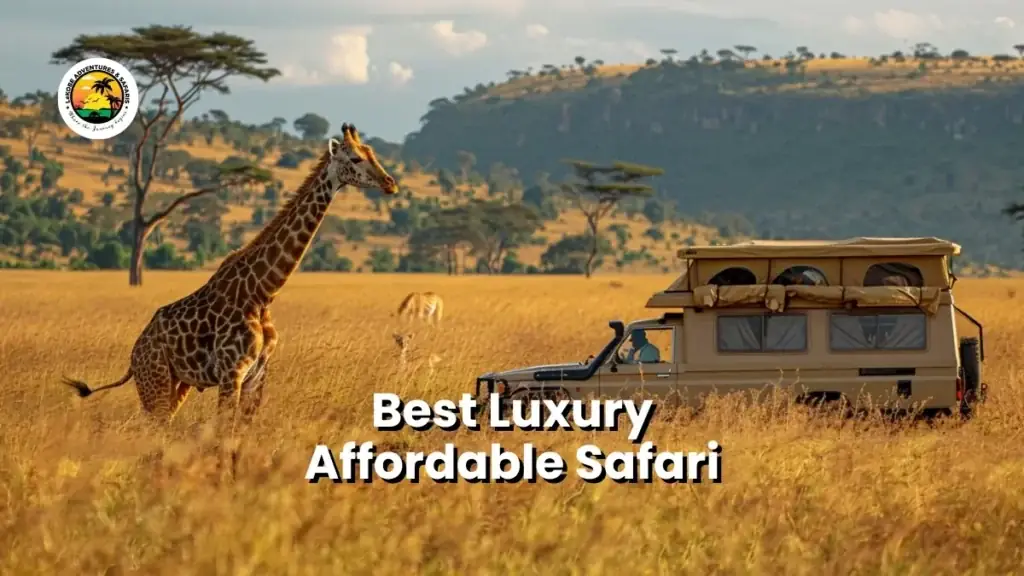
Evaluating top luxury safari expeditions in America requires discarding traditional hospitality definitions and looking instead at the technical mechanics of wildlife access, territory control, and specialist guidance. Unlike traditional game drives in enclosed African private reserves, North American operations operate within a mosaic of land ownership—including National Park Service lands, U.S. Forest Service holdings, Bureau of Land Management acres, state trust lands, sovereign tribal reservations, and massive private conservation holdings.
High-end wildlife operations in America can be divided into two distinct operating environments:
-
Public-Land Commercial Guiding: Operations operating within national parks and forests under strictly allocated Commercial Use Authorizations (CUAs) or Special Use Permits. Access relies on public infrastructure, off-peak timing strategies, and specialist biologists to navigate crowded wildlife corridors while remaining compliant with federal habituation regulations.
-
Private Concession & Reserve Model: Operations staged on vast, contiguous private land holdings (often ranging from 20,000 to over 500,000 acres) or exclusive tribal leases. These setups provide full territorial control, private road networks, custom off-road vehicle access, and uncrowded wildlife viewing.
The term “safari” in an American context is often misconstrued as a marketing buzzword for simple scenic drives or commercial zoo tours. In practice, a true high-end wildlife expedition is defined by active wildlife tracking led by certified naturalists or wildlife biologists. It uses specialized vehicles, private aircraft, or watercraft to follow animal movements, seasonal migrations, and predator-prey dynamics in real time, all while maintaining high standards of field comfort, safety, and Leave No Trace ethics.
Understanding this sector requires evaluating three fundamental operational pillars:
-
Ecological Expertise: Guiding staff composed of professional wildlife biologists, tracker-naturalists, or veteran wilderness leads capable of interpreting wildlife signs, wind patterns, and behavioral nuances.
-
Logistical Precision: Seamless coordination of private air transfers, specialized ground vehicles, and remote mobile camps across vast distances with zero municipal utility support.
-
Regulatory Compliance: Rigorous adherence to the Marine Mammal Protection Act, Endangered Species Act, National Park Service commercial regulations, and tribal sovereignty laws.
Deep Contextual Background
The historical trajectory of wildlife-focused travel in North America evolved through distinct historical phases, shifting from resource extraction and market hunting to conservation-minded wildlife observation.
The historical evolution developed through key milestones:
-
Late 1800s to Early 1900s: The era of early naturalist surveys and sport-hunting expeditions led by guides in regions like the Greater Yellowstone Ecosystem and the Adirondacks.
-
1916–1960s: The establishment of the National Park Service and the expansion of public-land wildlife viewing, which concentrated visitor activity along fixed road corridors.
-
1970s–1990s: The emergence of private wilderness guiding and river-outfitting companies, along with the growth of bear-viewing operations in coastal Alaska following the Alaska National Interest Lands Conservation Act (ANILCA) of 1980.
-
2000s–Present: The growth of large-scale private land conservation reserves (such as bison rewilding projects in the Great Plains) and the adoption of high-end, low-impact safari models across North America.
Historically, luxury outdoor travel in the American West was centered on fixed “dude ranches” or lodge-based hunting camps. As public interest shifted from hunting to non-consumptive wildlife viewing, field operators adapted their infrastructure. Former hunting outfitters converted pack-train itineraries into camera-based wildlife tracking expeditions.
Concurrently, private land conservation efforts gave rise to large private reserves where native wildlife—including bison, elk, wolves, and prairie dog colonies—were re-established on a landscape scale. Today, private land managers combine ecosystem restoration with limited, high-end guest access, creating a North American alternative to private African game reserves.
Conceptual Frameworks and Mental Models
To evaluate and design wildlife expeditions across North America, operational planners rely on three core conceptual models:
1. The Human-Wildlife Disturbance Gradient (HWDG)
This framework evaluates how human presence alters animal behavior across varying levels of isolation:
-
Zone A (Habituated Road Corridors): High human density; animals exhibit habituation or tolerance, but natural behaviors are often disrupted by crowd dynamics.
-
Zone B (Managed Backcountry Trails): Moderate human density; wildlife maintains natural alertness; strict distance rules are required to prevent displacement.
-
Zone C (Pristine/Deep Wilderness): Zero habituation; wildlife is extremely sensitive to human presence, requiring long-range optics, strategic wind placement, and concealed viewing positions.
2. The Multi-Tenure Access Matrix (MTAM)
This model charts the complexity of moving across multi-jurisdictional land mosaics. An expedition moving through a single ecosystem may cross National Park land, State Wildlife Management Areas, private ranches, and tribal land in a single day—each with distinct rules regarding off-road travel, drone usage, firearm possession, and commercial guide permits.
3. The Naturalist-to-Guest Value Ratio (NGVR)
The NGVR measures the ratio of field naturalists, trackers, and logistics support crew to guests. In top-tier operations, this ratio often operates at 1:2 or 1:3. Low ratios allow guides to tailor tracking strategies to real-time wildlife movement without compromising group safety or causing wildlife displacement.
Key Categories and Operational Variations
North American wildlife safari operations vary significantly based on target species, terrain, transport methods, and seasonal timing.
| Expedition Category | Primary Target Species | Regional Operations Hub | Transport Dynamics | Operational Challenges |
| Greater Yellowstone Predator Expeditions | Wolves, Grizzlies, Bison, Elk | Montana, Wyoming, Idaho | Heated 4×4 snowcoaches, tracked vehicles | Sub-zero temperatures, park road closures |
| Alaskan Coastal Bear Safaris | Coastal Brown Bears, Salmon | Katmai, Lake Clark, Kodiak | Bush planes (floats), specialized boats | Marine weather, tidal windows, dense brush |
| Great Plains Bison & Prairie Reserves | Bison, Black-Footed Ferrets, Prairie Dogs | Montana, South Dakota, Nebraska | Open-air custom 4×4 safari vehicles | Private land access, vast distances |
| Arctic Tundra & Polar Bear Journeys | Polar Bears, Arctic Foxes, Muskoxen | Churchill (MB), Northern Alaska | Tundra buggies, polar-rated vessels | Extreme cold, sea ice instability |
| Pacific Northwest Marine Safaris | Orcas, Humpbacks, Sea Otters | San Juan Islands, Puget Sound, SE Alaska | Custom zodiacs, private yachts | Maritime weather, strictly enforced pod distance rules |
| Desert Megafauna & Bighorn Tracking | Desert Bighorn, Pronghorn, Cougar | Arizona, Utah, Texas (Big Bend) | High-clearance 4x4s, foot tracking | Heat extremes, sparse water, rugged terrain |
1. Greater Yellowstone Predator Expeditions
Focused on tracking wolf packs, grizzly bears, and wintering ungulate herds across the Northern Range and backcountry river basins.
-
Trade-offs: Offers exceptional predator viewing and deep biological context; highly subject to winter weather closures and crowded public road corridors during summer peak seasons.
2. Alaskan Coastal Bear Safaris
Utilizing floatplanes and private anchored vessels to access remote estuaries where brown bears feed on sedges and salmon runs.
-
Trade-offs: Provides rare, close-range access to unharassed bear populations; highly dependent on maritime weather windows and strict tidal flight schedules.
3. Great Plains Bison & Prairie Reserves
Staged across massive private conservation ranches, focusing on native grassland restoration, bison herd dynamics, and nocturnal predator tracking.
-
Trade-offs: Complete spatial control and private access without crowds; limited mountain topography and higher reliance on vehicle-based travel over vast acreage.
4. Arctic Tundra & Polar Bear Journeys
Operating along coastal tundra ecosystems to observe polar bear migrations and Arctic marine life.
-
Trade-offs: Unmatched access to high-latitude species; extremely high operational costs, complex cold-weather logistics, and reliance on specialized transport.
5. Pacific Northwest Marine Safaris
Combining private watercraft and coastal base camps to observe resident and transient orca pods, baleen whales, and coastal wildlife.
-
Trade-offs: High mobility along ocean corridors; subject to rough sea conditions and strict legal distance buffers around marine mammals.
6. Desert Megafauna & Bighorn Tracking
Focusing on tracking desert bighorn sheep, pronghorn, and desert predators across remote southwestern canyonlands.
-
Trade-offs: Stark, uncrowded landscapes with high solitude; extreme heat fluctuations and low animal densities require patient tracking over vast distances.
Detailed Real-World Scenarios
To illustrate operational execution across varied North American landscapes, consider the following real-world field scenarios.
Winter Wolf Tracking in the Northern Range (Yellowstone Ecosystem)
-
Context: A private party of four books a five-day winter predator tracking expedition in February, targeting wolf pack interactions and winter ungulate survival strategies.
-
Constraints: Temperatures dropping below -20°F; restricted winter park road access requiring specialized over-snow transport; strict distance mandates around wintering wildlife.
-
Operational Sequence:
-
Pre-dawn coordination with local research biologists to review recent telemetry and track reports.
-
Deployment in custom heated 4×4 tracked vehicles equipped with spotting scopes, thermal imaging optics, and cold-weather field equipment.
-
Setting up long-range optics positions along ridge lines to observe pack movements without causing flight responses.
-
-
Failure Mode & Mitigations: Heavy ground blizzards eliminate visibility and block mountain passes.
-
Mitigation: Shift focus to low-elevation valley bottoms using high-resolution thermal optics for tracking in timberline shelter, supported by heated mobile field shelters.
-
Remote Estuarine Bear Tracking (Katmai Coast, Alaska)
-
Context: A photo-expedition group charters a five-day coastal bear viewing operation based from an anchored charter vessel, landing on remote coastal sedge flats via floatplane.
-
Constraints: Severe 20-foot tidal fluctuations; dense coastal fog; strict National Park Service bear-viewing ethics requiring group cohesion and static viewing locations.
-
Decision Logic: The lead naturalist evaluates morning wind direction and tide tables to select an open gravel bar landing zone. The group establishes a static perimeter, allowing bears to move naturally along their feeding paths without feeling cornered.
-
Second-Order Effects: Rapid fog formation blocks the floatplane’s return route, requiring the ground crew to deploy emergency shore-camp gear (bear-proof food vaults, satellite comms, and emergency shelters) carried on all day-packs.
Private Ranch Bison & Nocturnal Tracking (Northern Great Plains)
-
Context: A private group books a three-day summer safari across a 100,000-acre private conservation ranch, focusing on bison herd behavior and spotlight tracking of nocturnal species.
-
Execution Strategy: Utilizing open-air 4×4 safari vehicles outfitted with infrared optics and high-intensity thermal scopes to observe re-introduced black-footed ferrets, badgers, and owls without bright white lights.
-
Risk Profile: Sudden summer convective storms causing flash flooding and turning bentonite-clay roads impassable. The team relies on real-time satellite radar and maintains pre-mapped gravel-ridge escape routes.
Planning, Cost, and Resource Dynamics
Operating top-tier wildlife expeditions in North America involves significant capital outlay, specialized equipment maintenance, and complex regulatory compliance costs.
| Cost Category | Daily Cost Range (Per Guest) | Key Cost Drivers |
| Private Air Transfers & Charters | $1,500 – $5,000 | Bush plane fuel, repositioning flights, pilot standby rates |
| Specialist Naturalist / Biologist Guides | $800 – $2,000 | Advanced degrees, tracker certifications, medical credentials |
| Private Concession & Access Fees | $500 – $2,500 | Daily land-lease rates, conservation donations, permit fees |
| Custom Expedition Vehicles & Logistics | $400 – $1,200 | Specialized 4×4 conversions, track units, maintenance |
| High-End Field Camps & Culinary Staff | $600 – $1,800 | Private field chefs, off-grid infrastructure deployment |
| Insurance, Safety & Satellite Comms | $150 – $400 | Emergency evacuation coverage, satellite data, permits |
Capital Allocation Dynamics
-
Aviation and Remote Transport Repositioning: A substantial portion of total trip costs stems from non-revenue aircraft repositioning—flying bush planes or helicopters empty to remote airstrips for staging.
-
Specialist Guide Compensation: Leading operations hire certified wildlife biologists and master trackers, whose compensation reflects years of field research and advanced safety credentials.
-
Conservation Lease Surcharges: Accessing exclusive private ranches involves direct funding of ongoing ecosystem restoration, wildlife monitoring, and habitat protection efforts.
Tools, Strategies, and Support Systems
Delivering high-level wildlife expeditions requires combining traditional tracking skills with modern field technology:
-
High-Definition Spotting Optics & Thermal Imaging: Swarovski/Leica spotting scopes paired with handheld FLIR thermal units to locate wildlife hidden in dense cover or across vast distances without disturbing them.
-
Custom-Engineered Safari Vehicles: Custom 4×4 platforms outfitted with pop-top viewing roofs, heated seats, drop-down camera mounts, and onboard 110V power banks for photo gear.
-
Satellite Telemetry & Weather Radar Units: Garmin inReach and Starlink Mini setups delivering real-time weather radar updates and direct comms with emergency dispatchers.
-
Bear-Proof Mobile Infrastructure: UDAP electric bear-fencing perimeters, certified bear-resistant food storage vaults, and high-output aerosol deterrent systems.
-
Advanced Field Medical Kits: Comprehensive wilderness medical kits equipped with trauma supplies, pulse oximeters, hypothermia management gear, and direct satellite link to medical directors.
-
Leave No Trace Waste Management Systems: Self-contained greywater and solid waste containment setups designed for sensitive Arctic and alpine environments.
Risk Landscape and Failure Modes
Managing safety and risk during wildlife encounters requires strict adherence to behavioral guidelines and terrain awareness.
The operational risk taxonomy covers four primary vectors:
-
Wildlife Conflict: Unexpected close-range encounters with apex predators (grizzlies, polar bears, cougars) driven by dense cover, wind shifts, or carcass defense.
-
Environmental & Weather Extremes: Rapid weather shifts, hypothermia hazards, flash floods, or whiteouts that disrupt transport and field operations.
-
Terrain & Transport Failures: Vehicle breakdowns on isolated roads, aviation delays due to fog or wind, or rivercraft strandings.
-
Regulatory Non-Compliance: Unintentional boundary trespass, exceeding permit group sizes, or violating distance rules around protected species.
Risk Management Protocols
-
Behavioral Distance Buffers: Maintaining mandatory minimum viewing distances (e.g., 100 yards from bears and wolves; 25 yards from other wildlife) to prevent habituation or defensive reactions.
-
Redundant Communication Systems: Carrying dual satellite networks (Iridium and Starlink) to ensure real-time comms during medical emergencies or equipment failures.
-
Comprehensive Evacuation Plans: Maintaining pre-arranged air-ambulance evacuation protocols and clear contingency plans for bad weather.
Governance, Environmental Stewardship, and Permitting
Commercial operations on public and private lands operate within a structured regulatory system designed to protect natural resources and wildlife populations.
| Agency / Land Owner | Regulatory Framework | Key Compliance Mandate |
| National Park Service (NPS) | Commercial Use Authorization (CUA) | Strict group limits, fixed trail use, wildlife distance rules |
| U.S. Forest Service (USFS) | Special Use Permit (SUP) | Seasonal access windows, wilderness area restrictions |
| Bureau of Land Management (BLM) | Special Recreation Permit (SRP) | Off-road vehicle limits, leave-no-trace waste protocols |
| Sovereign Tribal Nations | Tribal Land Enterprise Permits | Cultural site protection, mandatory local guide employment |
| Private Conservation Ranches | Exclusivity & Lease Contracts | Direct funding for habitat restoration, species counts |
Adherence to these rules is mandatory. Violations can lead to immediate permit loss, significant fines, and exclusion from operating on public lands.
Measurement, Tracking, and Operational Evaluation
Evaluating the success of a high-end wildlife expedition requires tracking both qualitative guest outcomes and quantitative conservation metrics.
Key performance metrics fall into two main categories:
-
Leading Indicators: Pre-trip weather monitoring, optic maintenance logs, guide-to-guest ratios, and pre-departure medical assessments.
-
Lagging Indicators: Post-trip wildlife sighting logs, zero-impact camp audits, guest feedback scores, and ongoing permit renewal success.
Common Misconceptions and Industry Oversimplifications
Myth 1: “An American Safari is Just a Drive Through a National Park”
Reality: Commercial road tours differ fundamentally from specialist wildlife expeditions. High-end journeys rely on private land access, long-range tracking, private aviation, and professional biologist guides to access wildlife far from crowded tourist corridors.
Myth 2: “Guaranteed Wildlife Sightings Mean a Better Expedition”
Reality: Ethically managed wild expeditions never guarantee animal sightings. Forcing close encounters often stresses wildlife or violates federal law. Top operations focus on interpreting tracking signs, habitat dynamics, and ecosystem health.
| Common Myth | Operational Reality |
| “Vehicles can drive off-road anywhere in the West.” | Off-road driving is prohibited on most public lands to prevent soil erosion and habitat destruction. |
| “Drones are great for tracking wildlife.” | Launching, landing, or operating drones is strictly illegal in all U.S. National Parks and most wilderness areas. |
| “Private land access isn’t necessary for remote wildlife.” | Private conservation ranches offer controlled, crowd-free environments unavailable on public lands. |
Myth 3: “Wildlife Photography Disturbs Animals Less Than Hunting”
Reality: Uncontrolled photography—such as crowding animals, using flash, or approaching too closely—can displace wildlife from feeding areas and cause significant stress. Professional expeditions use long-range optics to minimize human impact.
Ethical, Environmental, and Regulatory Considerations
The growth of private wildlife travel in North America brings important ethical responsibilities:
-
Mitigating Human-Wildlife Conflict: Expeditions must ensure that human presence does not habituate animals to food or compromise their natural wariness toward humans.
-
Supporting Conservation Economies: High-end operations help fund habitat preservation, rewilding initiatives, and local rural economies by leasing private conservation lands.
-
Respecting Tribal Sovereignty: Partnering with indigenous communities ensures that wildlife expeditions respect native cultural heritage and support local economic self-determination.
Conclusion
Private wildlife travel in North America has matured into a sophisticated sector that combines wildlife conservation, advanced logistics, and expert field guidance. Successfully executing top luxury safari expeditions in America requires an understanding of complex land ownership, animal behavior, regulatory compliance, and risk management.
When operated responsibly, these expeditions provide meaningful access to North America’s wild spaces while supporting long-term landscape conservation. By prioritizing ecological integrity, expert leadership, and operational rigor, field operators can deliver exceptional wildlife experiences that protect the very species and habitats that make these journeys possible.