Best Luxury Polar Expeditions in the US: In-Depth Operational & Regional Guide
The northern reaches of the United States contain some of the most ecologically severe and operationally demanding polar environments on Earth. Spanning from the sub-arctic glaciated fjords of Southeast Alaska and Prince William Sound to the true high-arctic tundra of the North Slope bordering the Beaufort Sea, North America’s high-latitude frontier offers an extraordinary realm for polar exploration. Historically, venturing into these sub-zero, ice-choked landscapes demanded severe physical sacrifice, specialized survival expertise, and primitive seasonal outposts. Over recent decades, however, an advanced infrastructure of polar-capable marine vessels, ski- and tundra-wheel-equipped bush aircraft, and engineered off-grid field camps has reshaped how these severe environments are accessed and experienced.
Evaluating high-end polar expeditions within the United States requires looking past standard hospitality definitions. True polar field operations function at the precise boundary between an unforgiving natural environment and engineered human support systems. The primary constraint in these high-latitude zones is rarely superficial luxury; rather, it is the intense operational friction of maintaining thermal protection, fresh culinary logistics, satellite communication telemetry, emergency medical response, and strict environmental compliance in regions entirely devoid of roads, municipal utilities, or immediate search-and-rescue services.
Navigating these polar corridors demands an analytical understanding of microclimates, ice dynamics, federal marine and wilderness protections, and specialized transport networks. Whether navigating a PC5 ice-strengthened expedition ship through calving glacial ice, deploying Zodiacs among sea ice floes in Utqiagvik, or staging a private ski-fly expedition across the icefield of the Wrangell-St. Elias Range, high-end polar expedition planning requires balancing ecological stewardship, local tribal governance, and rigorous safety protocols.
This comprehensive analysis provides an exhaustive reference for identifying, evaluating, and executing high-latitude field operations within United States territory. It examines the operational mechanics, cost structures, geographical trade-offs, and risk management frameworks that govern modern polar access. Designed for expedition planners, logistics specialists, and analytical travelers, this document serves as a definitive reference for high-end sub-Arctic and Arctic field operations.
Understanding “Best Luxury Polar Expeditions in the US.”
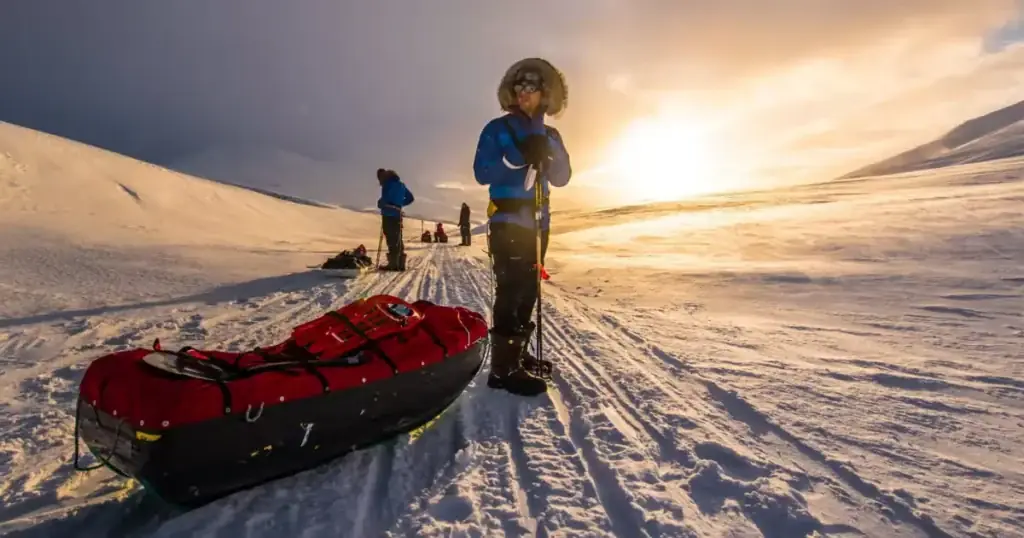
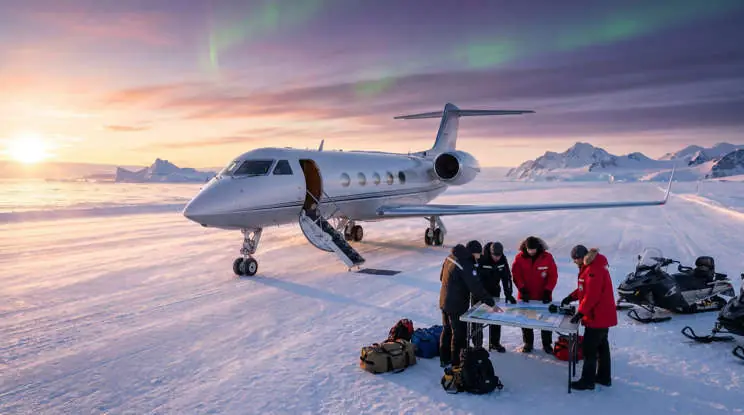
Analyzing the best luxury polar expeditions in the US requires establishing a clear distinction between traditional cruise travel and active, high-capability polar field operations. A standard cruise vessel operates along established deep-water channels with limited shore landings and minimal technical field support. Conversely, a true polar expedition uses purpose-built infrastructure—such as ice-strengthened hulls (Polar Class rated), twin-engine bush aircraft, and mobile dome encampments—to penetrate dynamic ice zones and roadless tundra environments.
Evaluating the best luxury polar expeditions in the US reveals three primary geographic and operational environments within American sovereignty:
-
High-Arctic Coastal & Tundra Enclaves (North Slope, Beaufort Sea, Utqiagvik): True Arctic conditions above the Arctic Circle. Operations center on polar bear tracking, sea-ice navigation, and indigenous cultural integration under midnight sun or polar night conditions.
-
Glacial Fjords & Marine Ice Corridors (Prince William Sound, Glacier Bay, Inside Passage): Sub-arctic maritime environments characterized by massive tidewater glaciers, icebergs, deep fjords, and marine mammal concentrations. Access relies heavily on ice-strengthened expedition vessels, Zodiac landing craft, and floatplanes.
-
Alpine Glacial Basins & Icefields (Wrangell-St. Elias, Alaska Range, Chugach): High-altitude, landlocked polar environments dominated by massive icefields, glacial moraines, and extreme alpine terrain. Operations depend entirely on ski-equipped bush planes, high-altitude helicopters, and heated mobile base camps.
To evaluate field access across remote residential ecosystems, destination types can be grouped into two core operational models:
-
Fixed Lodges & Coastal Outposts: Built upon permanent foundations and localized micro-grid infrastructure. They rely on floatplane docks, deep-water piers, or private airstrips, offering a completely controlled domestic environment with stable civil utilities.
-
Mobile & Off-Grid Expedition Enclaves: Operating entirely on autonomous, zero-trace setups with solar microgrids, gravity water filtration, and satellite telemetry. Access relies on ski-planes, tundra-tired aircraft, or PC-rated vessels across dynamic, weather-dependent access corridors.
In evaluating the best luxury polar expeditions in the US, luxury is not defined by static opulence; it is measured by the complete mitigation of environmental harshness. The ability to enjoy heated, climate-controlled living spaces, gourmet chef-prepared cuisine, and warm sanitation facilities after hours spent on sea ice or glacial terrain represents the true core of this operational category.
To evaluate these high-latitude operations accurately, four core operational pillars must be assessed:
-
Ice & Terrain Capabilities: The structural class of vessels (PC5/PC6 hulls) or air transport (ski-wheel hydraulic assemblies) deployed in field maneuvers.
-
Medical & Evacuation Margins: The presence of Wilderness Emergency Medical Technicians (WEMTs), hyperbaric/hypothermia care protocols, and direct satellite-linked medevac channels.
-
Wildlife Safety Protocols: Strict adherence to federal guidelines regarding apex predators (polar bears, coastal brown bears) using non-lethal deterrent perimeters and trained bear guards.
-
Regulatory & Tribal Permissions: Full compliance with the Marine Mammal Protection Act (MMPA), National Park Service (NPS) wilderness guidelines, and sovereign Inupiat/Inuit land permissions.
Deep Contextual Background
The historical evolution of polar exploration in North America is tied to early indigenous survival routes, whaling routes, scientific surveys, and the mid-century development of Arctic aviation. Long before commercial expeditions existed, Inupiat and Yupik communities mastered high-latitude living along the Bering Sea and Arctic Ocean coasts, developing sophisticated marine and ice navigation techniques.
The evolutionary progression developed through distinct historical phases:
-
Late 1800s: Early Arctic whaling operations and Native trade routes across the Bering Strait and Beaufort Sea.
-
1910s–1940s: Early scientific surveys and the birth of Alaskan bush aviation using early ski-equipped aircraft.
-
1950s–1970s: Construction of military infrastructure, including the Distant Early Warning (DEW) Line across northern Alaska, establishing remote airstrips.
-
1980: Enactment of the Alaska National Interest Lands Conservation Act (ANILCA), protecting over 100 million acres of polar public lands while defining outfitting frameworks.
-
2010s–Present: Development of modern high-end polar expedition ships, ski-flying enclaves, and zero-trace Arctic dome camps.
The post-World War II era marked a major turning point for high-latitude access. The construction of military infrastructure—such as the Distant Early Warning (DEW) Line across northern Alaska—established airstrips, radar communication hubs, and weather monitoring stations in previously unreachable Arctic locations. Concurrently, pioneering bush pilots modified light aircraft with specialized skis and oversized tundra tires, allowing landings on glaciers, gravel bars, and frozen sea ice.
The enactment of ANILCA in 1980 permanently protected massive polar ecosystems while establishing strict frameworks for commercial outfitting permits. Over recent decades, advances in marine engineering and off-grid technology have transformed polar travel. Modern expedition ships feature dynamic positioning systems and clean hybrid-electric propulsion systems. On land, lightweight geodesic domes, portable solar arrays, and satellite communications allow luxury mobile encampments to be established deep in the Arctic backcountry without leaving a permanent footprint.
Conceptual Frameworks and Mental Models
Navigating the logistical realities of high-latitude expedition planning requires structured mental models. Three core frameworks guide field managers and expedition designers:
1. The Ice-Weather-Aviation Matrix (IWAM)
The IWAM evaluates how operational freedom shifts based on environmental conditions:
-
Green Condition (Open Operating Window): Clear skies (cloud ceiling > 3,000 ft), stable wind (< 15 knots), open sea ice density (< 3/10 coverage). Aircraft and Zodiac landings execute on primary schedules.
-
Yellow Condition (Marginal Window): Low fog (ceiling 500–1,000 ft), moderate wind (15–30 knots), pack ice density (4/10 to 6/10 coverage). Flight operations shift to visual floor limits; marine vessels switch to secondary sheltered fjords.
-
Red Condition (Field Lockdown): Zero visibility fog, gale-force winds (> 35 knots), heavy sea ice packing (> 7/10 coverage). All air operations grounded; field camps initiate shelter-in-place protocols.
2. The Thermal Efficiency-Weight Model (TEWM)
This model balances camp comfort against transport weight limits. In high-latitude field operations, every pound of equipment transferred via bush plane or Zodiac requires fuel expenditure:
-
Low-Weight / High-Density: Technical goose-down bedding, vacuum-sealed freeze-dried culinary bases, satellite data terminals, synthetic insulation shelters.
-
High-Weight / High-Comfort: Diesel-fired radiant heaters, fresh cold-chain produce, heavy canvas wall tents, satellite television units.
Field managers optimize the TEWM by deploying high-efficiency, lightweight materials that deliver maximum thermal retention without exceeding transport payload capacities.
3. The Polar Evacuation Margin (PEM)
The PEM measures the time required to transport an injured or ill guest from a remote polar field location to a definitive tertiary care hospital (such as Providence Alaska Medical Center in Anchorage):
-
Zone 1 (Near-Frontcountry): Coastal fjords near Juneau or Ketchikan; medical air evacuation under 4 hours.
-
Zone 2 (Deep Sub-Arctic): Central Alaska Range or Prince William Sound; medevac window between 6 and 12 hours depending on weather.
-
Zone 3 (High-Arctic Remote): North Slope tundra or deep Brooks Range; medevac window can exceed 24–48 hours during Arctic weather groundings.
Key Categories and Operational Variations
The landscape of American polar expeditions encompasses several distinct operational types, each presenting unique logistical requirements, transport modes, and terrain dynamics.
| Expedition Category | Primary Transport Mode | Regional Hubs | Primary Operational Bottleneck |
| High-Arctic Sea Ice & Wildlife | PC5 Expedition Ships, Zodiacs | Utqiagvik, Kotzebue, Prudhoe Bay | Sea ice pack density, polar bear safety |
| Glacial Fjord Small-Ship Expeditions | PC6 Marine Yachts, Skiffs | Juneau, Sitka, Whittier | Calving ice hazards, marine fog |
| Alpine Icefield Heli-Skiing | A-Star Helicopters, Ski-Planes | Valdez, Cordova, Girdwood | Avalanche hazards, weather groundings |
| Glacial Fly-In Base Camps | Otter/Cessna Ski-Planes | Talkeetna, McCarthy, Kantishna | Glacial crevasse shifts, runway snow melt |
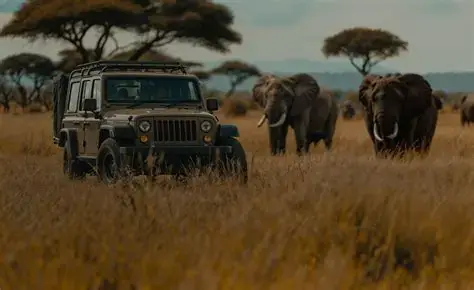
| Tundra Overland 4×4 Safaris | Custom Tracked Vehicles | Fairbanks to Arctic Ocean (Dalton) | Mechanical breakdown, gravel road closures |
| Coastal Brown Bear & Glacier Safaris | Floatplanes, Private Anchored Vessels | Katmai Coast, Kodiak, Lake Clark | Extreme tidal shifts, dense brush cover |
1. High-Arctic Sea Ice & Wildlife Expeditions
Operating in the far north of Alaska along the Beaufort and Chukchi Seas, these expeditions focus on viewing polar bears, bowhead whales, and Arctic foxes in their natural habitat.
-
Trade-offs: Offers true high-arctic isolation and rare wildlife encounters; constrained by extreme cold, high costs, and weather delays.
2. Glacial Fjord Small-Ship Expeditions
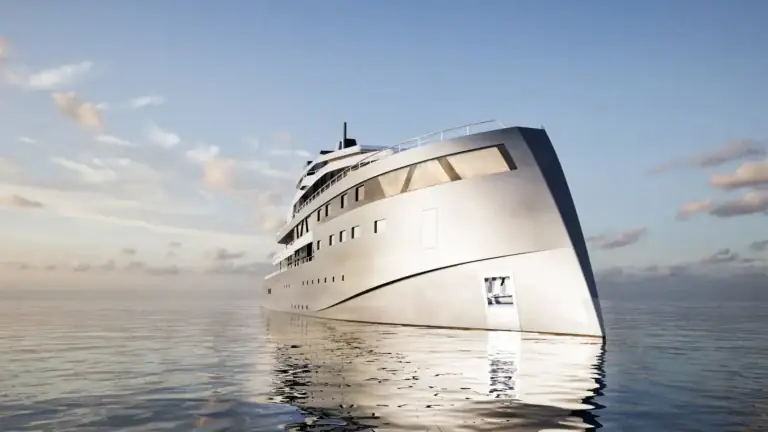
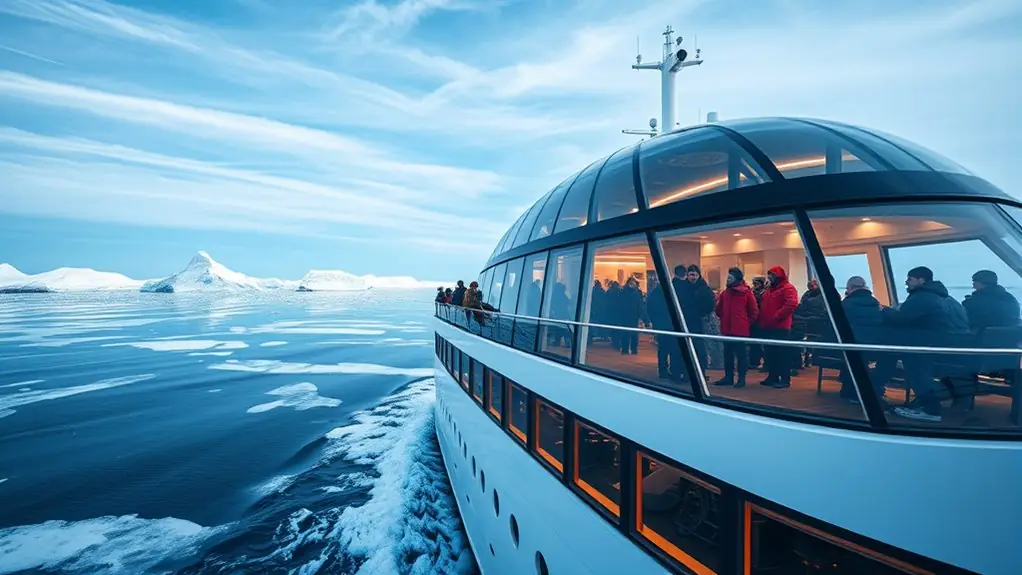
Utilizing small, ice-strengthened luxury vessels (holding 12 to 148 guests) to navigate deep tidewater fjords, view glacier ice calving, and land Zodiacs on isolated gravel beaches.
-
Trade-offs: High daily mobility, excellent dining, and warm accommodations; fixed maritime itineraries and inability to access deep landlocked interiors.
3. Alpine Icefield Heli-Skiing & Mountaineering
Designed for active guests seeking untracked glacier powder or icefield traverses, supported by high-capability helicopters and mountain guides.
-
Trade-offs: Unmatched alpine access and physical thrills; requires high guest physical fitness and carries inherent avalanche and terrain risks.
4. Glacial Fly-In Base Camps
Deploying semi-permanent geodesic domes onto major icefields (such as the Root Glacier or Ruth Amphitheater) via ski-equipped aircraft.
-
Trade-offs: Deep immersion inside dramatic glacial valleys; complete reliance on aviation resupply and basic portable sanitation setups.
Detailed Real-World Scenarios
To illustrate how operational theory functions in practice, consider these detailed real-world polar field scenarios:
Beaufort Sea Ice-Edge Tracking (Utqiagvik, Alaska)
-
Context: A private group of six charters a specialized Arctic expedition team to track polar bear movements along the sea ice edge near Utqiagvik in late October.
-
Constraints: Temperatures hovering around -10°F with wind chill dropping to -30°F; freeze-up sea ice instability; strict Inupiat tribal hunting land boundaries; zero daylight by late autumn.
-
Operational Sequence:
-
Pre-expedition briefing with local Inupiat polar bear spotters and armed bear guards.
-
Daily transport via enclosed, heated tracked vehicles to pre-scouted coastal ice-viewing positions.
-
Setting up windbreak shelters and thermal optics to observe wildlife from safe, non-disruptive distances.
-
-
Failure Mode & Mitigations: An offshore wind causes a sudden fracture in the shore-fast sea ice, threatening to cut off ground vehicle return routes.
-
Mitigation: Real-time satellite ice-radar tracking alerts the lead guide 45 minutes before fracture, triggering an immediate retreat to stable mainland tundra perimeters.
-
Deep Glacier Fjord Exploration (Prince William Sound)
-
Context: A luxury expedition vessel charters an eight-day itinerary exploring calving tidewater glaciers and narrow fjord arms in Prince William Sound during June.
-
Constraints: Heavy ice-choke in narrow fjords; dense coastal sea fog; strict National Forest wilderness sea-landing permits.
-
Decision Logic: The captain utilizes forward-looking sonar and a searchlight-equipped bow position to navigate floating ice bits, launching Zodiacs only when brash ice density drops below 3/10.
-
Second-Order Effects: A massive glacier calving event creates a 6-foot displacement wave. The expedition lead directs all Zodiacs to turn into the wave face in deep water, preventing craft capsizing or beach strandings.
Ruth Glacier Fly-In Enclave (Denali National Park)
-
Context: A private party flies via ski-equipped de Havilland Otter onto the Ruth Glacier to stay four nights in a heated dome enclave surrounded by 5,000-foot granite walls.
-
Constraints: Complete absence of ground transport; night temperatures dropping below zero; high solar reflection causing rapid surface snow melt during spring afternoons.
-
Execution Strategy: Flights execute during early morning hours when glacier surface crust is frozen solid, ensuring clean landing and takeoff conditions for ski aircraft.
Planning, Cost, and Resource Dynamics
Executing top-tier polar expeditions in the United States involves substantial capital outlay, specialized equipment maintenance, and complex logistics chains.
| Cost Category | Daily Cost Range (Per Guest) | Primary Cost Drivers |
| Aviation & Marine Charters | $2,500 – $7,500 | Jet-A aviation fuel, twin-engine aircraft, PC-rated hull insurance |
| Specialized Polar Crew & Guides | $1,000 – $2,500 | Polar expedition leads, WEMT doctors, bear guards, chefs |
| High-Latitude Camp Infrastructure | $500 – $1,800 | Insulated dome shelters, diesel-hydronic heating, solar arrays |
| Cold-Chain Logistics & Culinary | $300 – $800 | Air-freighted fresh organic produce, vacuum-sealed proteins |
| Permitting, Tribal & Land Fees | $200 – $600 | National Park CUA fees, Native Corporation access permits |
| Emergency Medevac & Comms | $150 – $450 | Satellite bandwidth, dedicated air-ambulance retainers |
Systemic resource allocation typically requires distributing operational capital across specific high-latitude operational needs:
-
Transport and Flight Charters (45%): Bush planes, twin-engine ski aircraft, helicopters, and PC-rated marine vessels.
-
Specialist Field Labor (25%): WEMT medical personnel, polar leads, master chefs, and armed bear guards.
-
Off-Grid Camp & Safety Infrastructure (15%): Heated geodesic domes, solar energy systems, and satellite communications links.
-
Provisions & Cold-Chain Supply (10%): Fresh air-freighted food, fuel reserves, and heavy gear transportation.
-
Permits, Insurance & Environmental Fees (5%): National Park CUA permits, tribal access fees, and specialized marine insurance.
Tools, Strategies, and Support Systems
Delivering high-end comfort and safety in sub-zero wilderness relies on advanced field technology and equipment:
The high-latitude technological stack is grouped across three core pillars:
-
Navigational and Marine Engineering: Polar-Class reinforced steel hulls (PC5/PC6) designed to break first-year ice, paired with forward-looking sonar and infrared optics to detect ice masses in complete fog or darkness.
-
Power and Communications: High-capacity LiFePO4 battery storage, solar microgrids, dual-orbit satellite terminals (Starlink and Iridium Certus), and Iridium emergency voice links.
-
Structural Thermal Defense and Waste: Geodesic double-walled insulated domes with diesel hydronic heaters, hydraulic ski-wheel aircraft gear, and portable zero-trace incinerators.
Additional support items critical to backcountry field deployment include:
-
Ski-Wheel Hydraulic Aircraft Configurations: Aircraft gear allowing pilots to transition seamlessly between paved runways and glacial snowpacks.
-
Portable Zero-Trace Waste Incinerators: High-temperature burn units compliant with strict Arctic leave-no-trace standards.
Risk Landscape and Failure Modes
Operating in high-latitude environments exposes expeditions to severe natural hazards. Failure modes in polar zones tend to compound rapidly if not managed immediately.
A cascade failure matrix typically follows a compounding sequence: an initial weather trigger (such as unpredicted sea fog dropping cloud ceilings to zero) grounds aviation resupply, straining camp food and fuel reserves, which then increases human thermal stress as sub-zero temperatures consume remaining heating fuel.
Risk Taxonomy and Compounding Threats
-
Hypothermia & Cold Injuries: Rapid body heat loss caused by cold water immersion, high winds, or inadequate footwear.
-
Apex Predator Conflicts: Surprising a polar bear or brown bear near a kill site or in dense fog.
-
Aviation & Marine Groundings: Sudden weather changes (icing, sea fog, ground blizzards) cutting off transport channels.
-
Glacial & Ice Crevasse Falls: Traversing snow-covered glaciers without proper rope-team protocols and ice-radar probing.
Governance, Environmental Stewardship, and Permitting
Commercial operations in American polar regions operate under strict multi-jurisdictional oversight.
| Governing Body | Legal Framework | Key Compliance Mandate |
| NOAA Fisheries / USFWS | Marine Mammal Protection Act (MMPA) | Mandatory distance buffers around seals, whales, polar bears |
| National Park Service (NPS) | Commercial Use Authorization (CUA) | Strict group size limits, leave-no-trace camping rules |
| Alaska Native Corporations | Sovereign Land Access Permits | Mandatory cultural protocols, local guide employment |
| U.S. Coast Guard (USCG) | Polar Code Ship Certification | Mandatory safety equipment, ice-navigator credentials |
Measurement, Tracking, and Operational Evaluation
Evaluating the success and safety of a high-latitude expedition requires tracking key operational indicators:
-
Leading Indicators: Real-time barometric pressure trends, ice-pack density maps, pre-departure thermal gear checks, and fuel reserve margins.
-
Lagging Indicators: Zero-impact environmental site audits, post-trip guest medical logs, aircraft delay hours, and wildlife interaction reports.
Common Misconceptions and Industry Oversimplifications
Myth 1: “Polar Expeditions are Only Possible in Antarctica or Greenland”
Reality: Northern Alaska contains pristine high-arctic tundra, pack ice ecosystems, and massive glaciated mountain ranges that offer polar experiences matching any global destination.
Myth 2: “Modern Technology Eliminates Weather Risks in the Arctic”
Reality: Satellite tracking and GPS improve situational awareness, but polar storms, sea fog, and whiteout blizzards can ground the most advanced aircraft and icebreakers.
| Surfaced Misconception | Operational Reality |
| “Polar bears can be safely approached in vehicles.” | Approaching polar bears disrupts critical hunting behavior and violates federal law. |
| “Summer in Alaska means warm weather everywhere.” | Arctic coastlines and mountain glaciers routinely experience freezing temperatures year-round. |
| “Satellite phones always work in deep canyons.” | High mountain walls block low-horizon satellite signals, requiring dual-orbit backups. |
Ethical, Environmental, and Regulatory Considerations
Operating in fragile Arctic ecosystems carries profound ethical responsibilities:
-
Protecting Climate-Stressed Wildlife: High-latitude species (polar bears, Pacific walrus) face habitat loss due to shrinking sea ice. Expeditions must maintain strict viewing distances to avoid causing energetic stress.
-
Supporting Indigenous Sovereignty: Partnering with Inupiat and Yupik communities ensures that commercial travel respects traditional subsistence hunting rights and supports local rural economies.
-
Minimizing Carbon & Black Carbon Footprints: Deploying hybrid-electric vessels, clean-burning fuels, and solar microgrids protects delicate Arctic ice surfaces from soot deposition.
Conclusion
The realm of high-latitude travel across North America represents a summit of expeditionary planning. Identifying the best luxury polar expeditions in the US requires looking beyond marketing claims to evaluate the technical infrastructure, aviation logistics, environmental permits, and risk management systems that make remote polar access possible.
Whether navigating glaciated fjords aboard an ice-strengthened vessel, flying onto remote icefields via ski-plane, or tracking Arctic wildlife along the Beaufort Sea, successful polar operations balance comfort with complete environmental respect. By prioritizing ecological integrity, expert leadership, and operational rigor, field operators deliver unforgettable journeys into North America’s most severe and majestic wild landscapes.